Foggy Drive
Roles:
Creative Consultant/ Narrative Writer
Concept Artist/ 3D Artist
Game Type: 3D Horror Narrative/Driving, Semi-Autobiographical
Team Type: Paid, Indie
Team size: 2+
Setting: California, 1987, Korean-American background.
In partnership with Indie Omakase and Princess Hermit LLC.
Deliverables:
Monster designs reflecting shifting emotional states
Character designs for the boy
Storyboards for key vignettes
Environmental design block out, interior perspectives.
Chris Cross (Silent Hill: Ascension, Space Marines, Medal of Honor) approached me through a mutual contact to help shape a deeply personal game concept: a semi‑autobiographical story about a child processing the loss of his father. The core idea centred on grief personified as a monster stalking the boy through a nightmare world enshrouded in fog.
Evolving the Narrative - Grief as a Companion
At the beginning of the project I was asked to analyse the narrative and propose ways to make the emotional arc accessible to a younger audience.
My key contribution was reframing the “grief monster” not only as a threat, but as a companion the child eventually learns to coordinate with — a metaphor for how grief becomes a lifelong presence we learn to live alongside. This shifted the game’s focus from control to connection: with others, with ourselves and with our emotions.
The visual language which evolved out of the narrative emphasised both vulnerability and resilience, grounding the fantastical horror in real emotional truth and gives an element of hope with makes it more terrifying in its juxtaposition.
Purpose & Impact - The Wider Community Building
Beyond the game itself, this project was designed as a teaching tool for new developers joining Chris’ platform, Indie Omakase — a way to inspire emerging talent and give them real, paid experience in indie game creation.
Contributing to a project that blends emotional storytelling, horror aesthetics, and industry mentorship was a genuine pleasure, and aligned with my own approach: using genre to explore the stresses of modern humanity and leave players with a sense of meaning and hope.
Mood Boarding
Concept Art & Visual Development
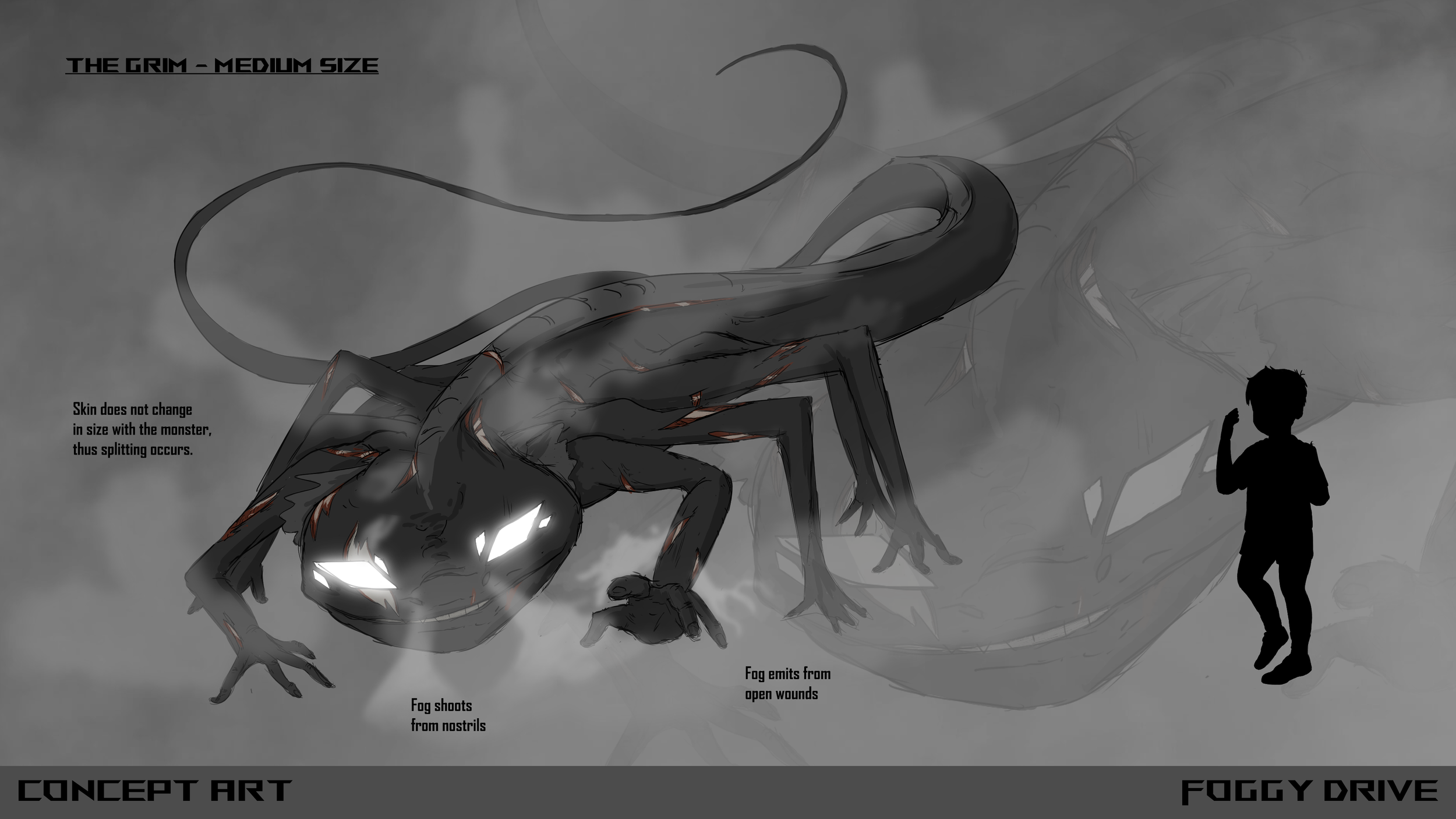
A design rooted in Chris’s childhood memories of catching lizards in his backyard. Inspired by Brandon Sanderson’s Koloss, the creature grows by tearing itself open, revealing a beating heart — a visceral metaphor for grief expanding faster than a child can contain it.
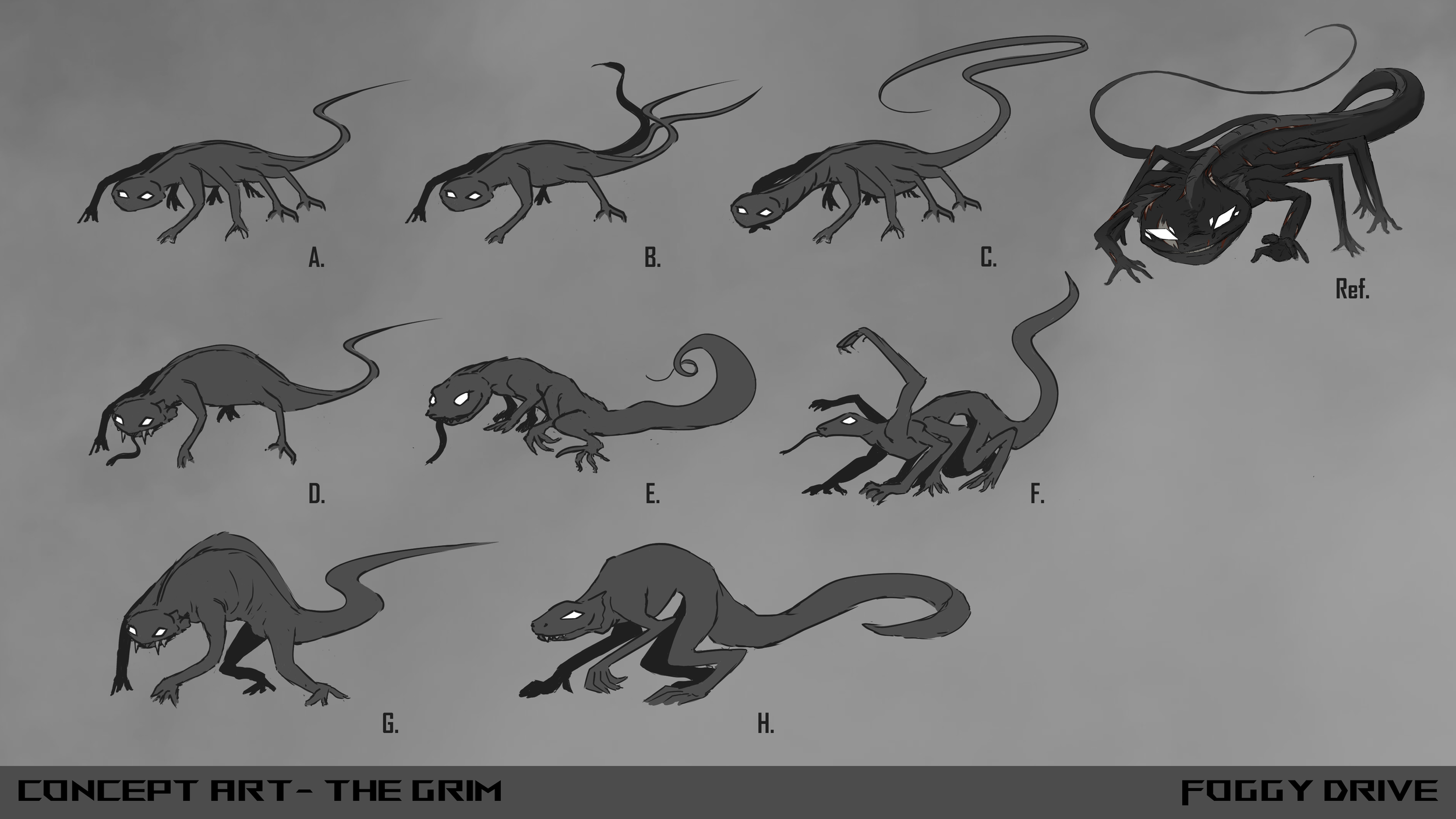
Because of my Aphantasia, my process is to draw a full model of the sort of character I want, then reverse engineer it to explore the options within that space. In this case something sneaky, long and reptilian inspired.
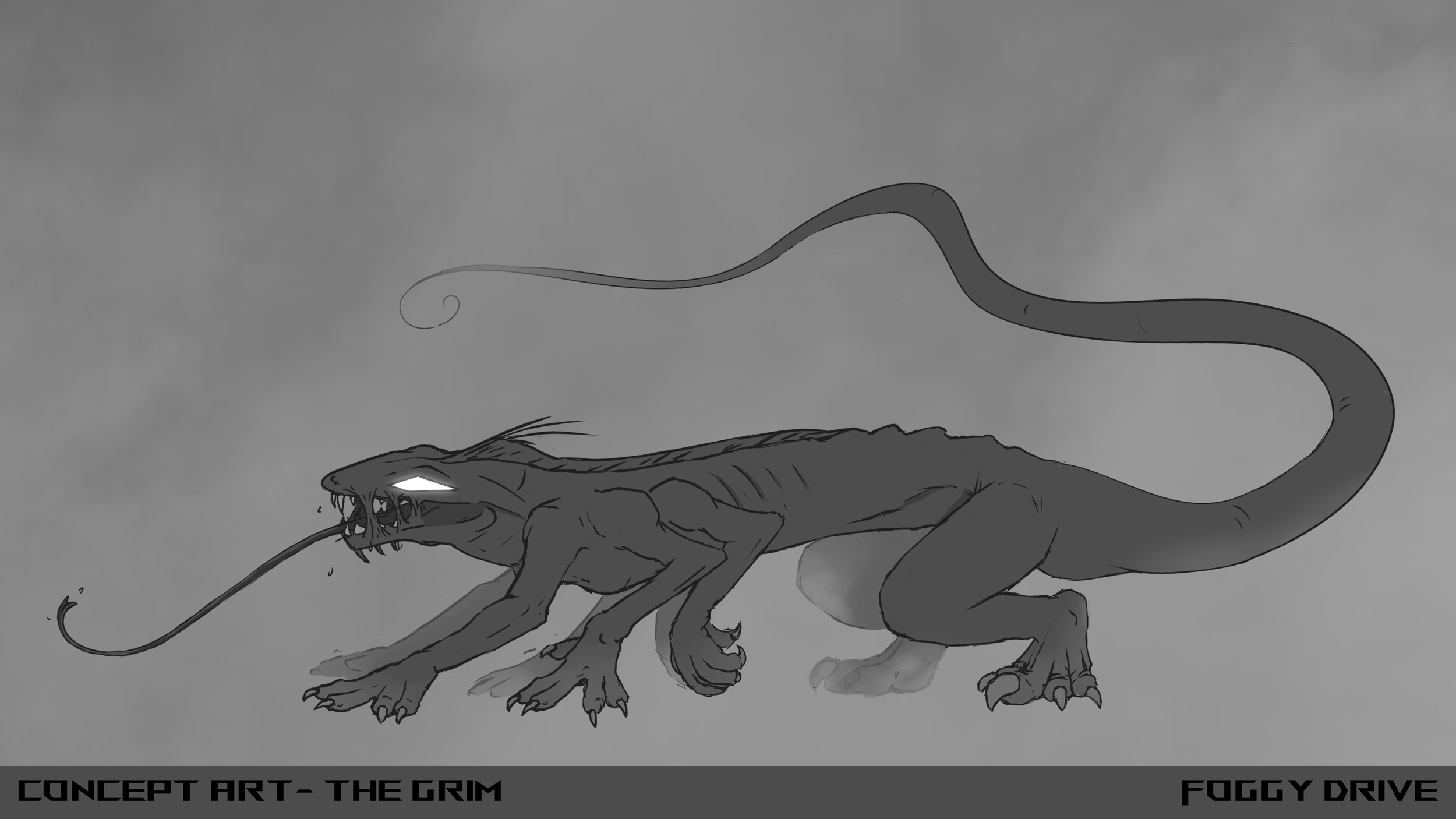
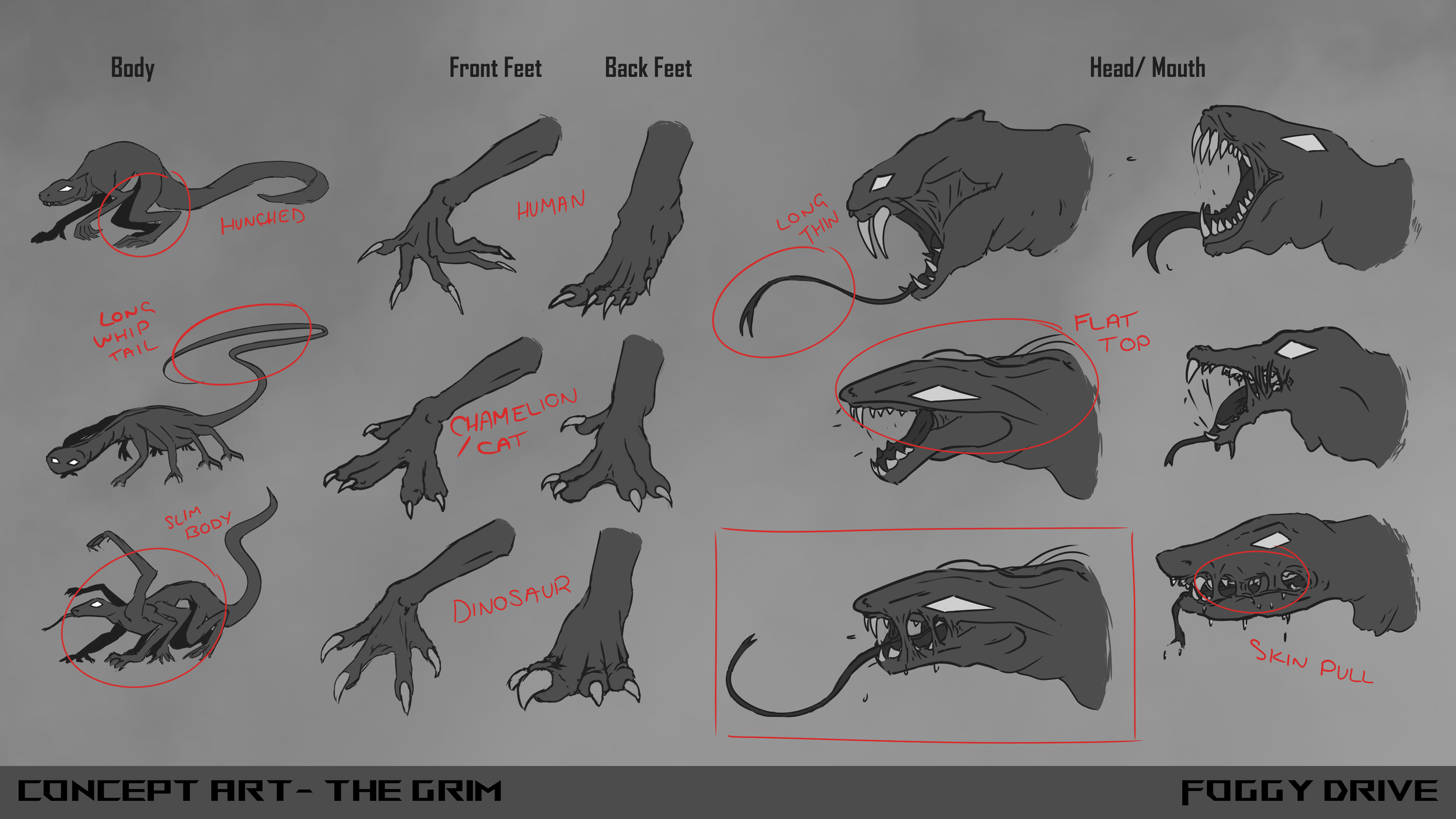
After understanding the body type, I moved to limbs and head to explore different options for a 'stalker' type beast who could also climb.
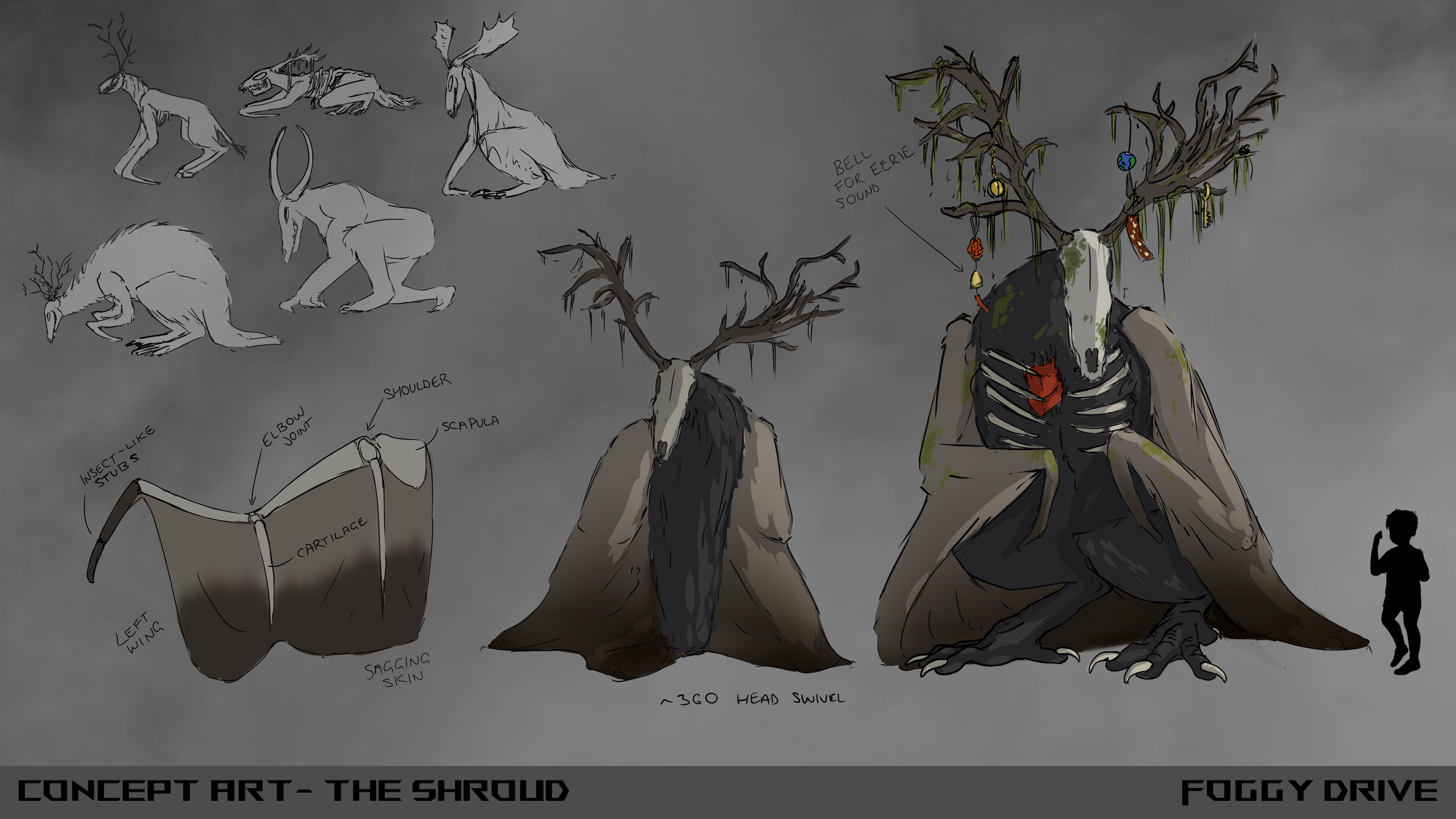
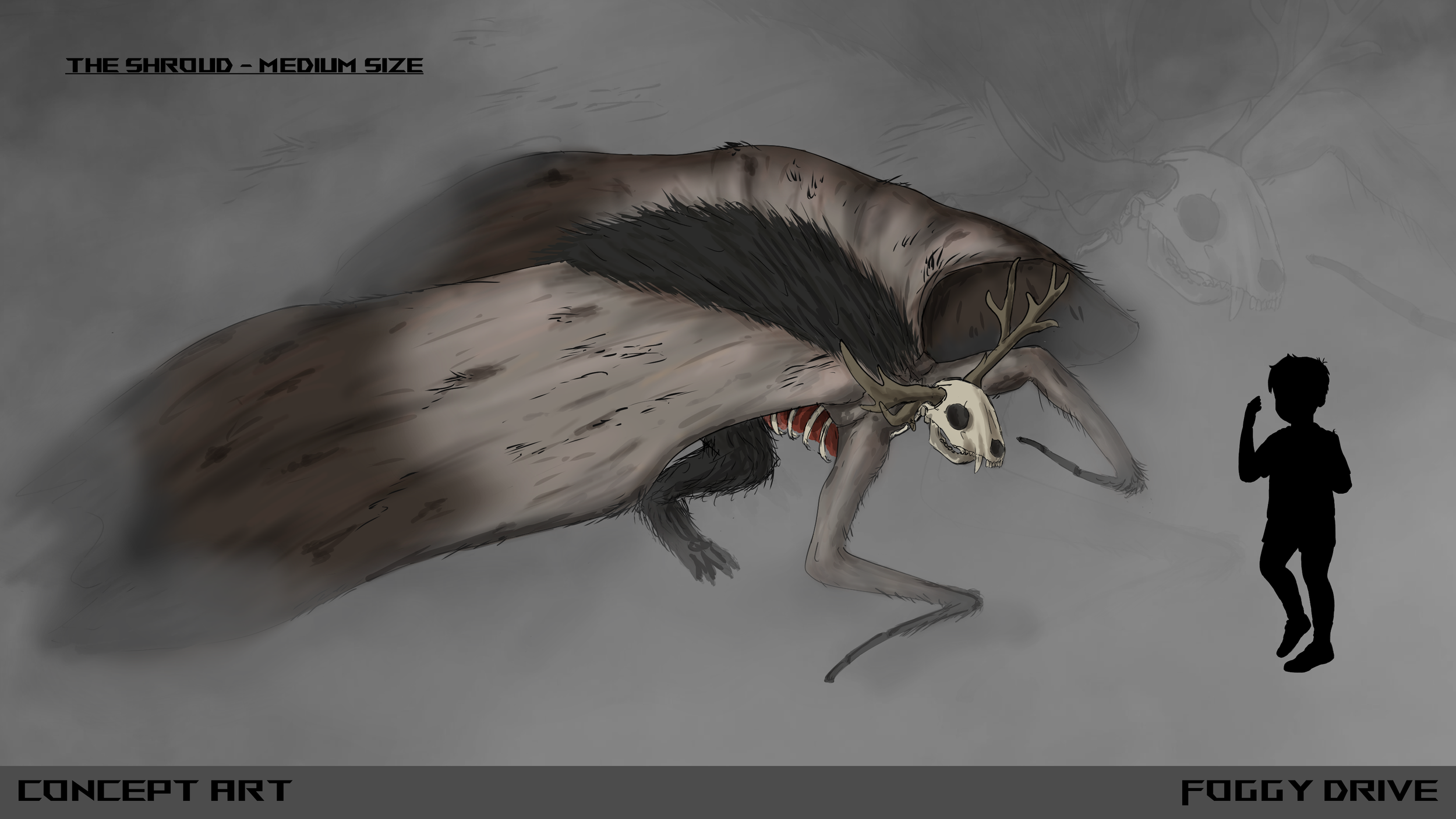
This version blends fog with moth‑dust, allowing the monster to dissolve into the environment. Its visual language draws from scavenger animals like deer and raccoons — bright eyes in the dark, innocence turned uncanny. All are creatures native to 1980s California, grounding the horror in Chris’s childhood landscape.
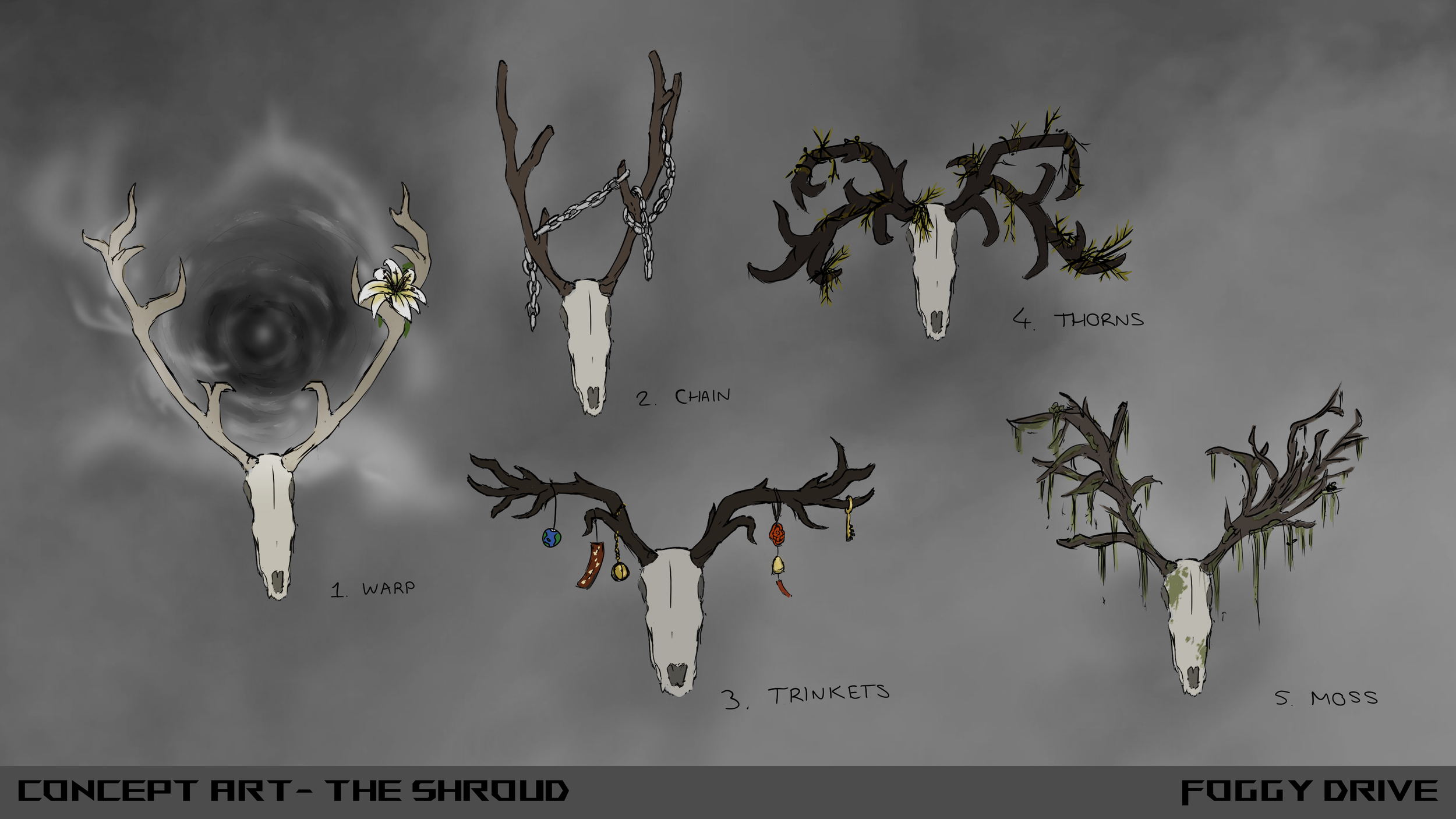
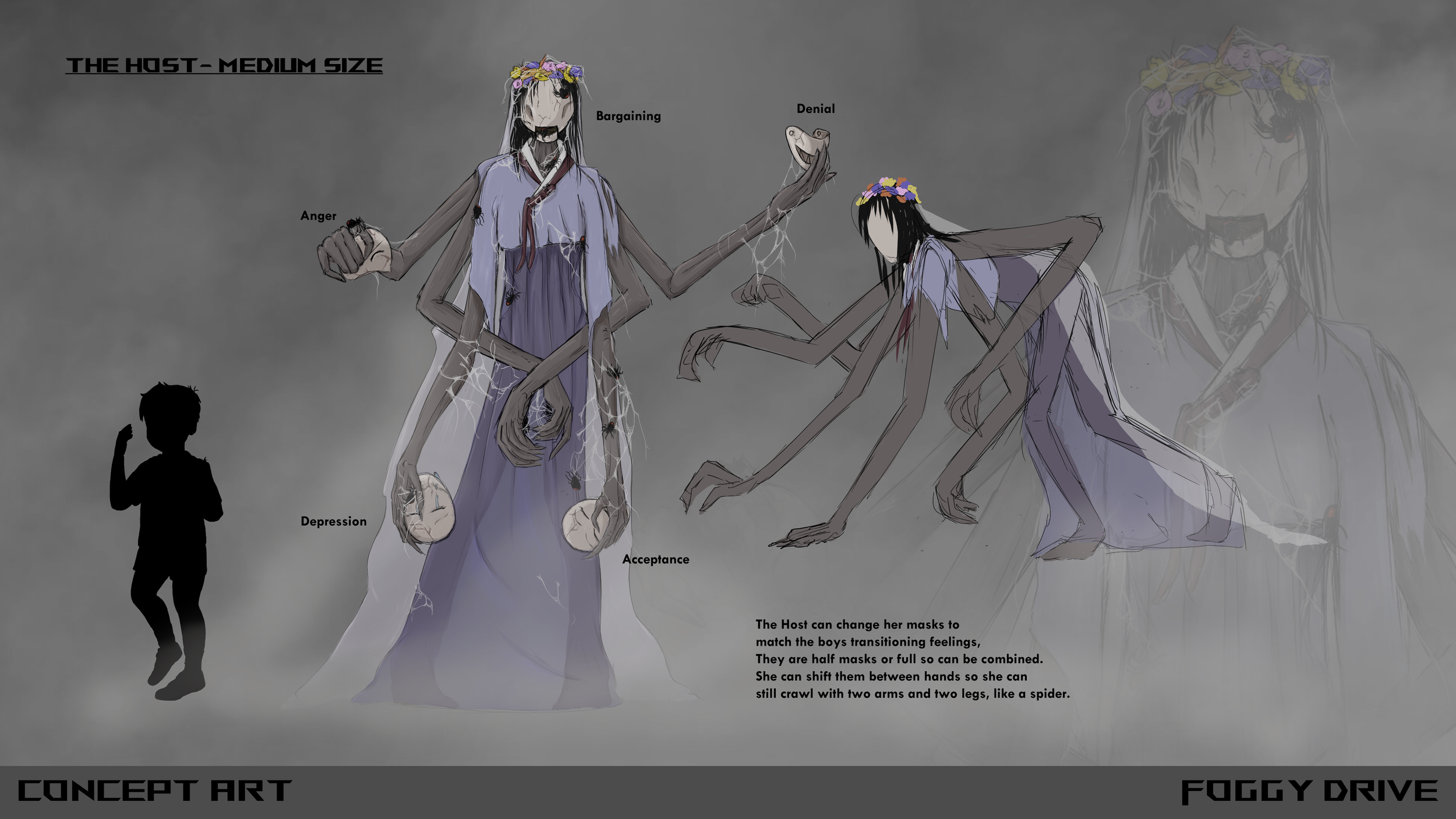
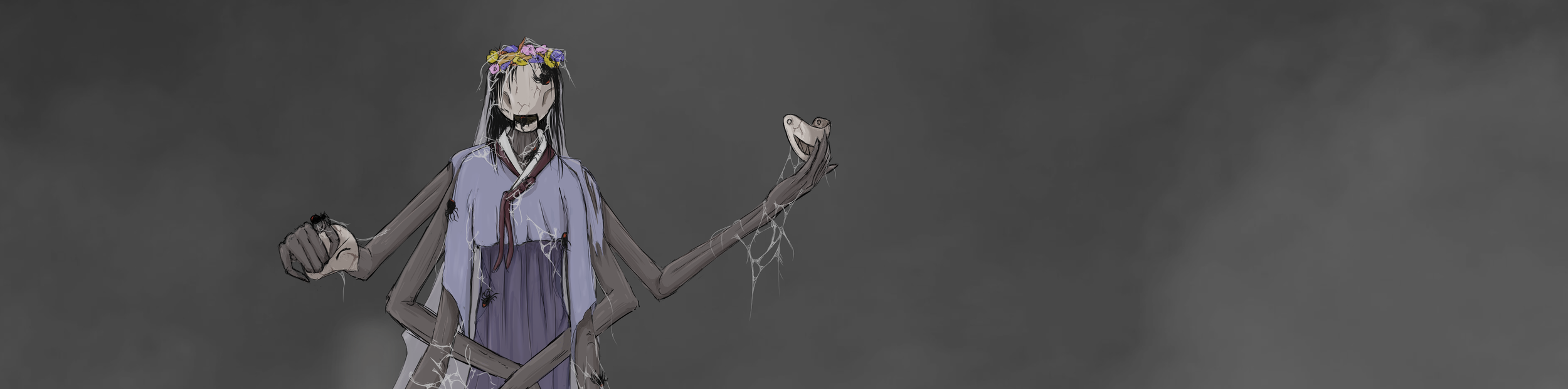
Exploring the tension of growing up in an American environment with Korean heritage, Chris described his mother as quite stoic and this informed the creature’s cold, masked presence. Widow spiders — a genuine Californian threat — inspired its web motifs, symbolising interconnectivity and complexity.
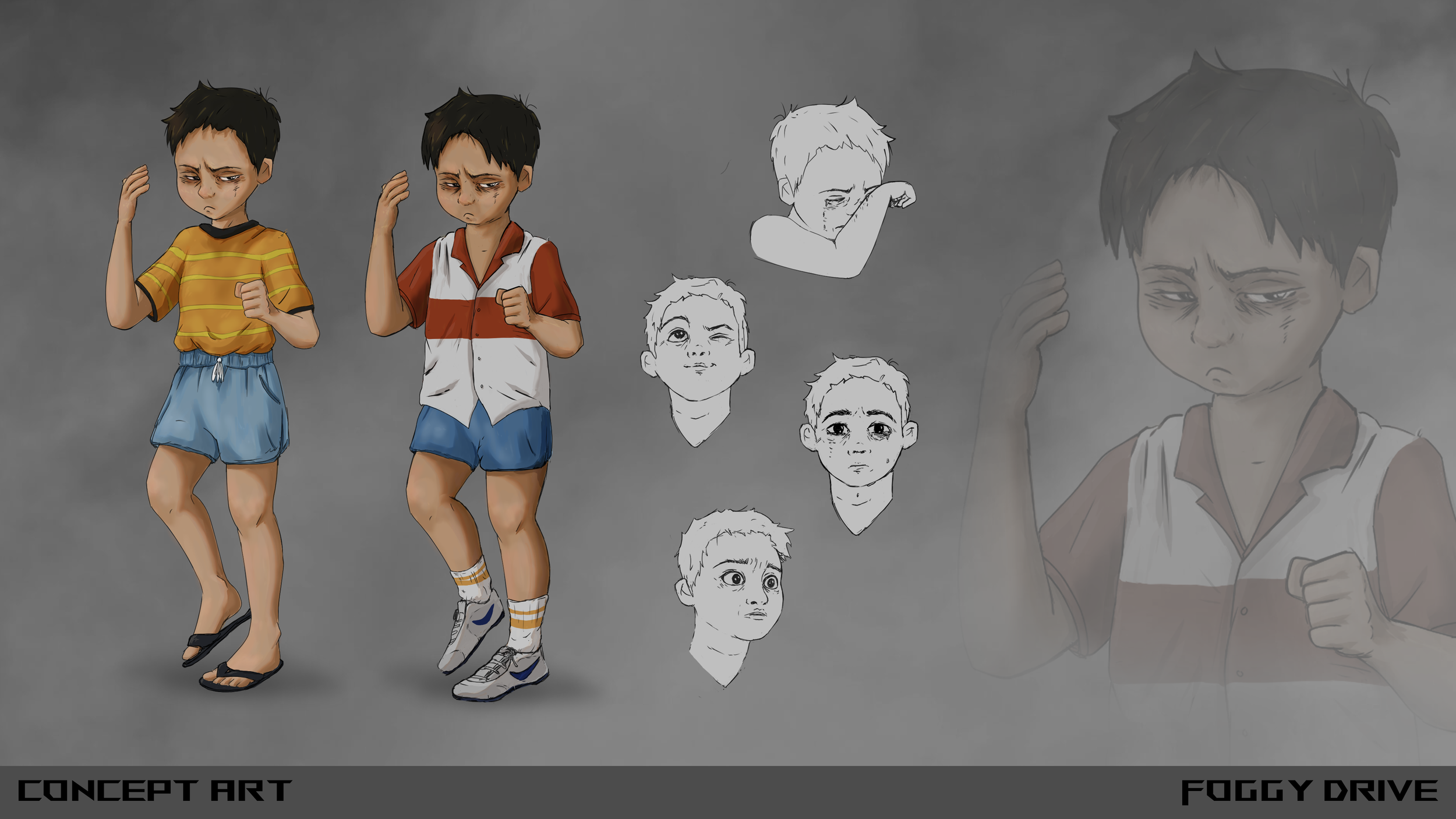
I needed to do extensive research to find the perfect mix of California by the coast, Korean background in the parents, and the age and body type of Chris as a child. Chris referenced a beloved pair of blue Quicksilver shorts he remembered which inspired the designs.
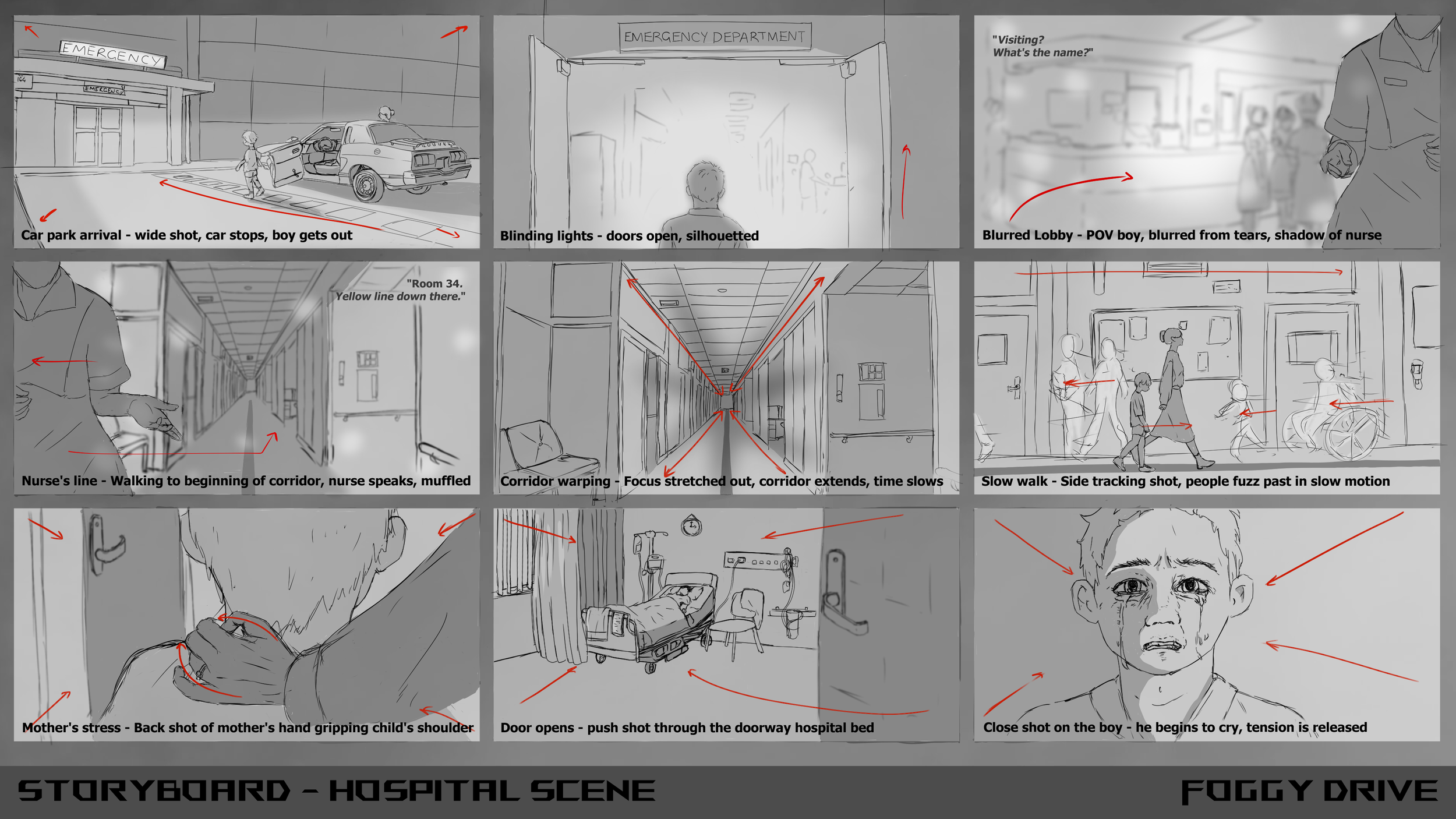
Storyboarding the hospital scene. I kept the mother faceless and aloof, as a strict Korean mother in the 80s might be, but you can see her tension in her hand before the door is opened, to reveal her true feelings.
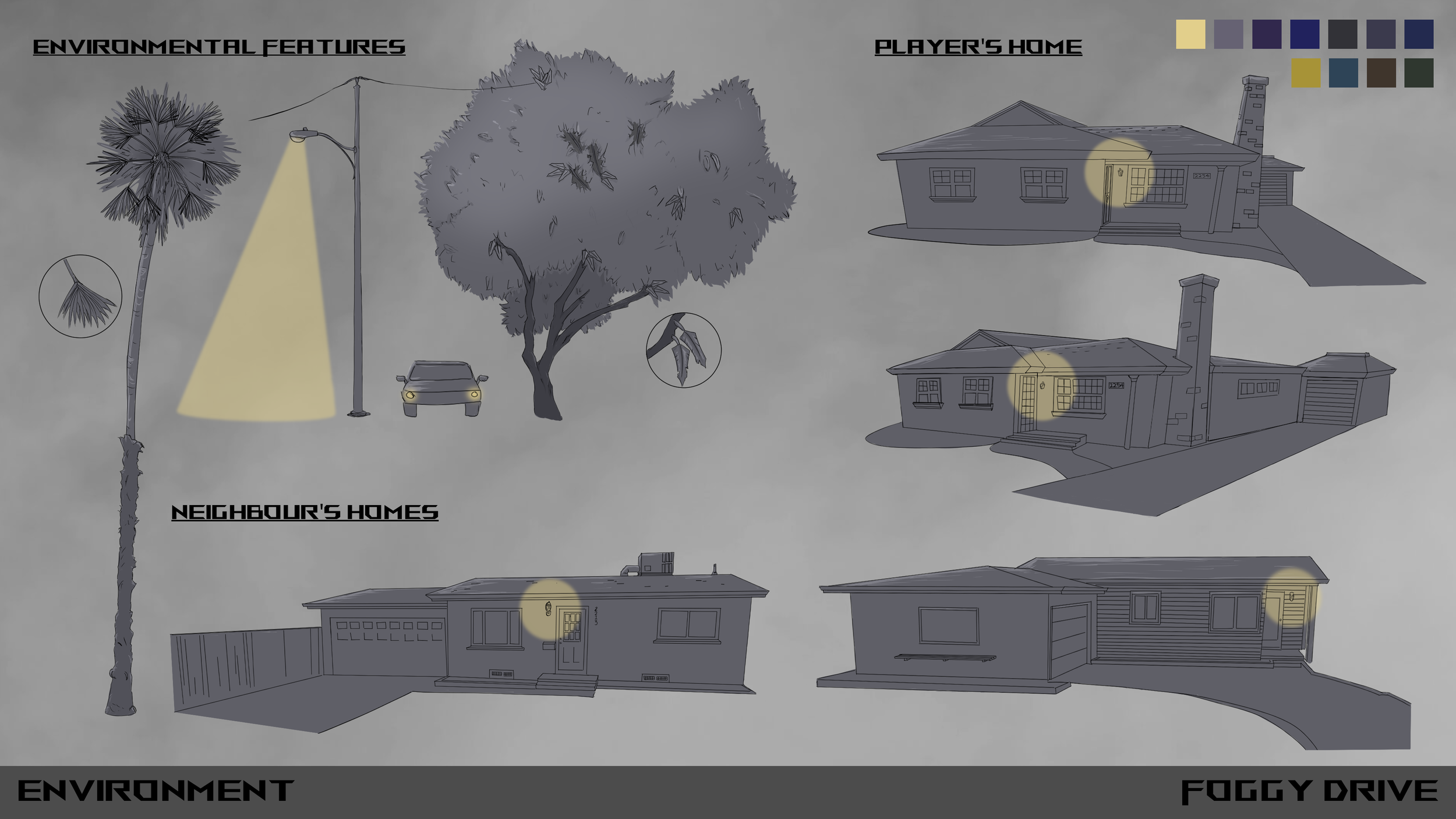
I enjoyed the shape of the bungalows on the real street location, so there's a lot of height variation with the plant life and lights - emphasising how small the player is. I used a lot of sharp edges and slightly warped perspective upwards so its not too comfortable.
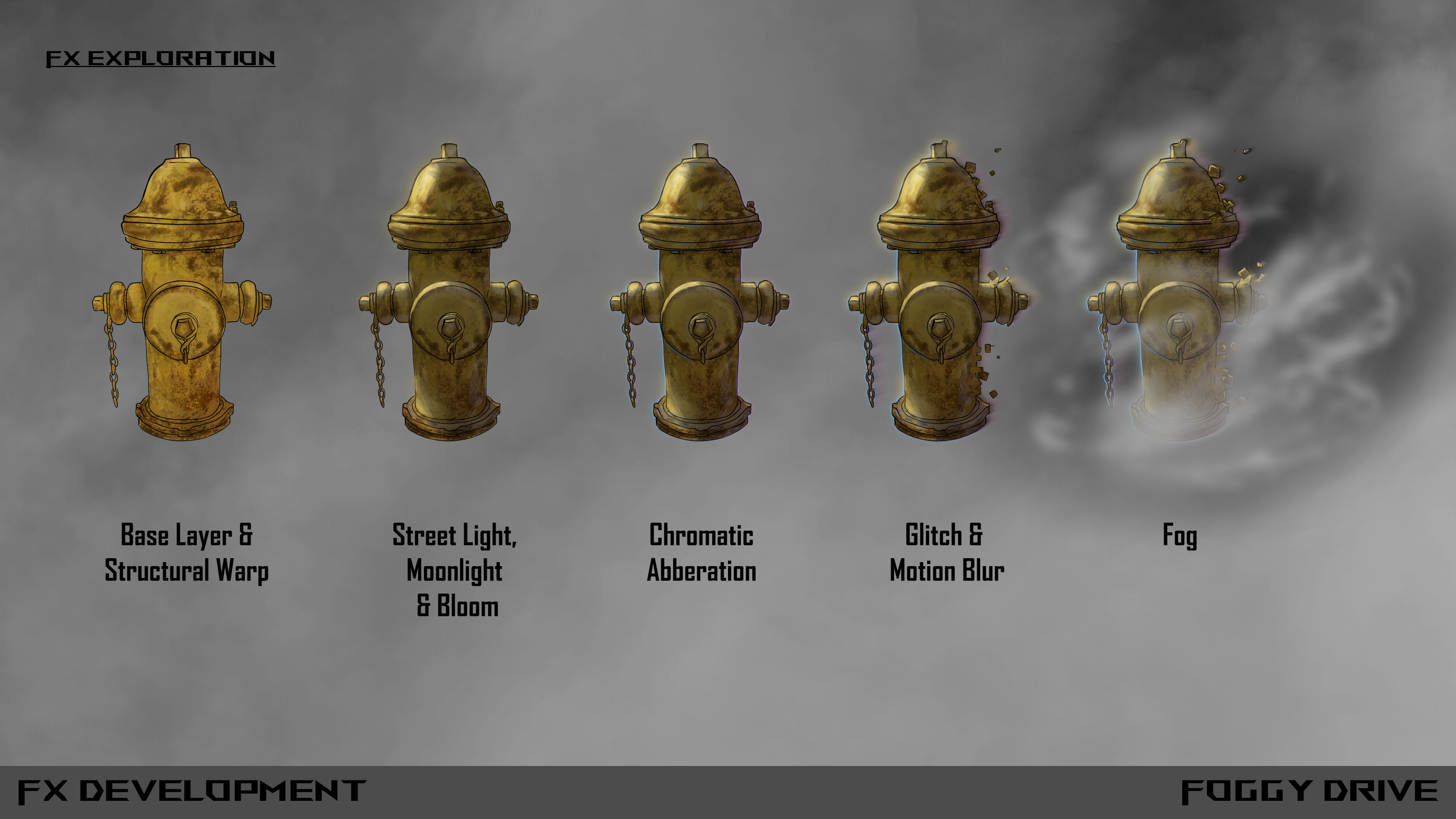
I explored FX that make the environment feel unstable, almost as if the game itself is glitching. That meta‑level confusion—where the player briefly wonders if something’s wrong with their system—creates a sharp counterpoint to the core theme of seeking comfort in games.
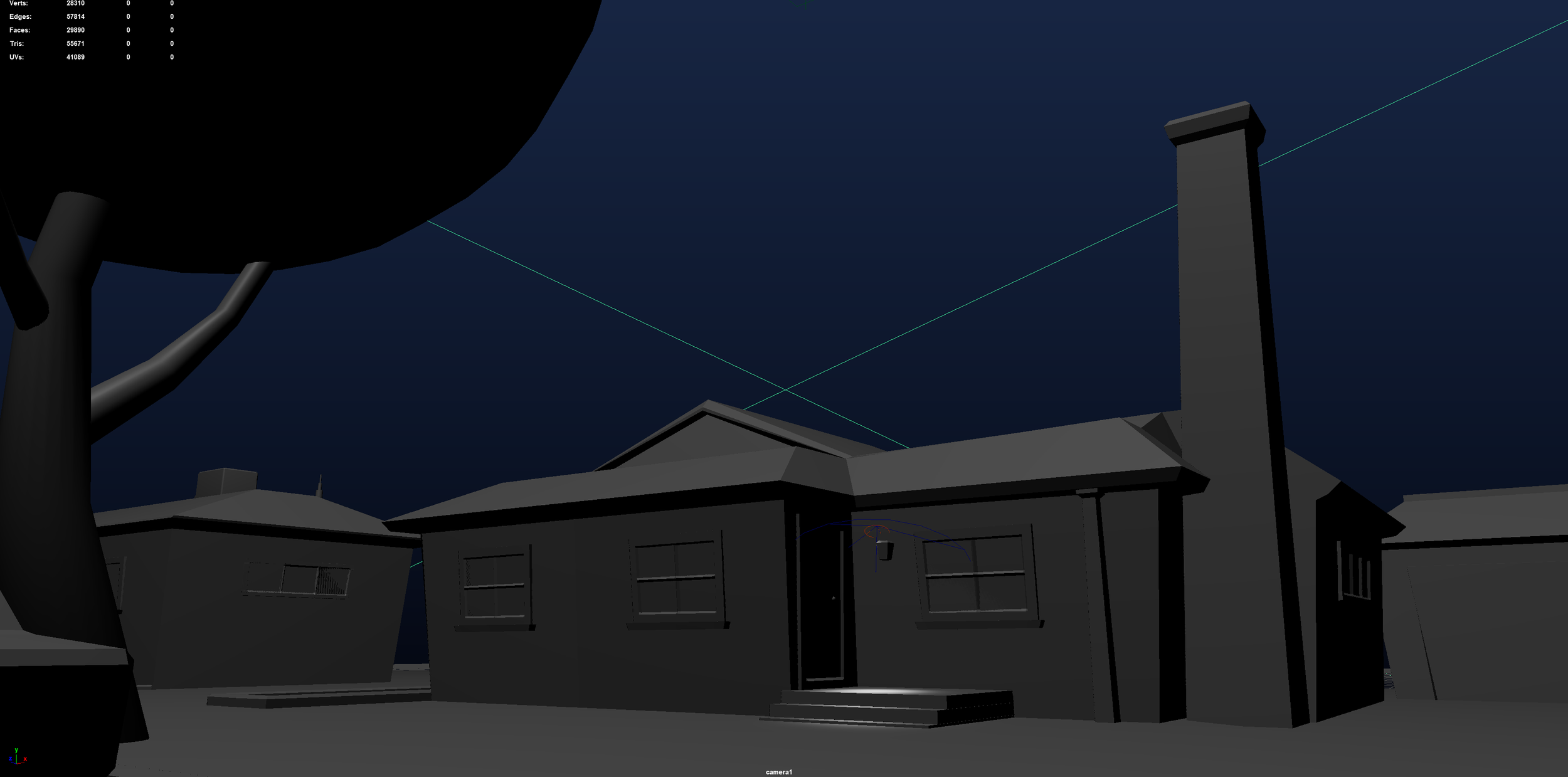
Testing child-height perspectives - decided to make the houses 30% bigger for a more imposing feel.
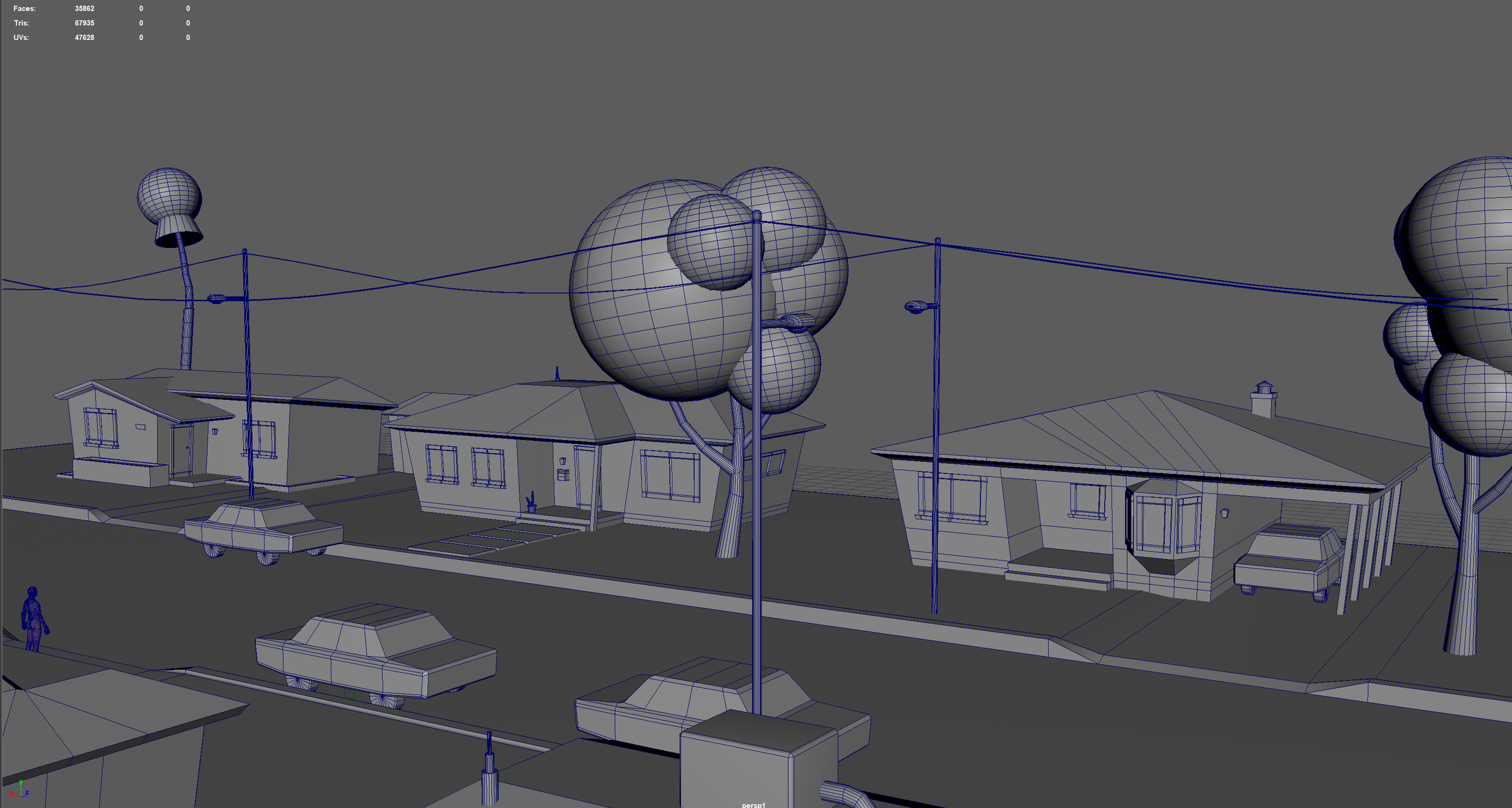
3D block-outs of the street
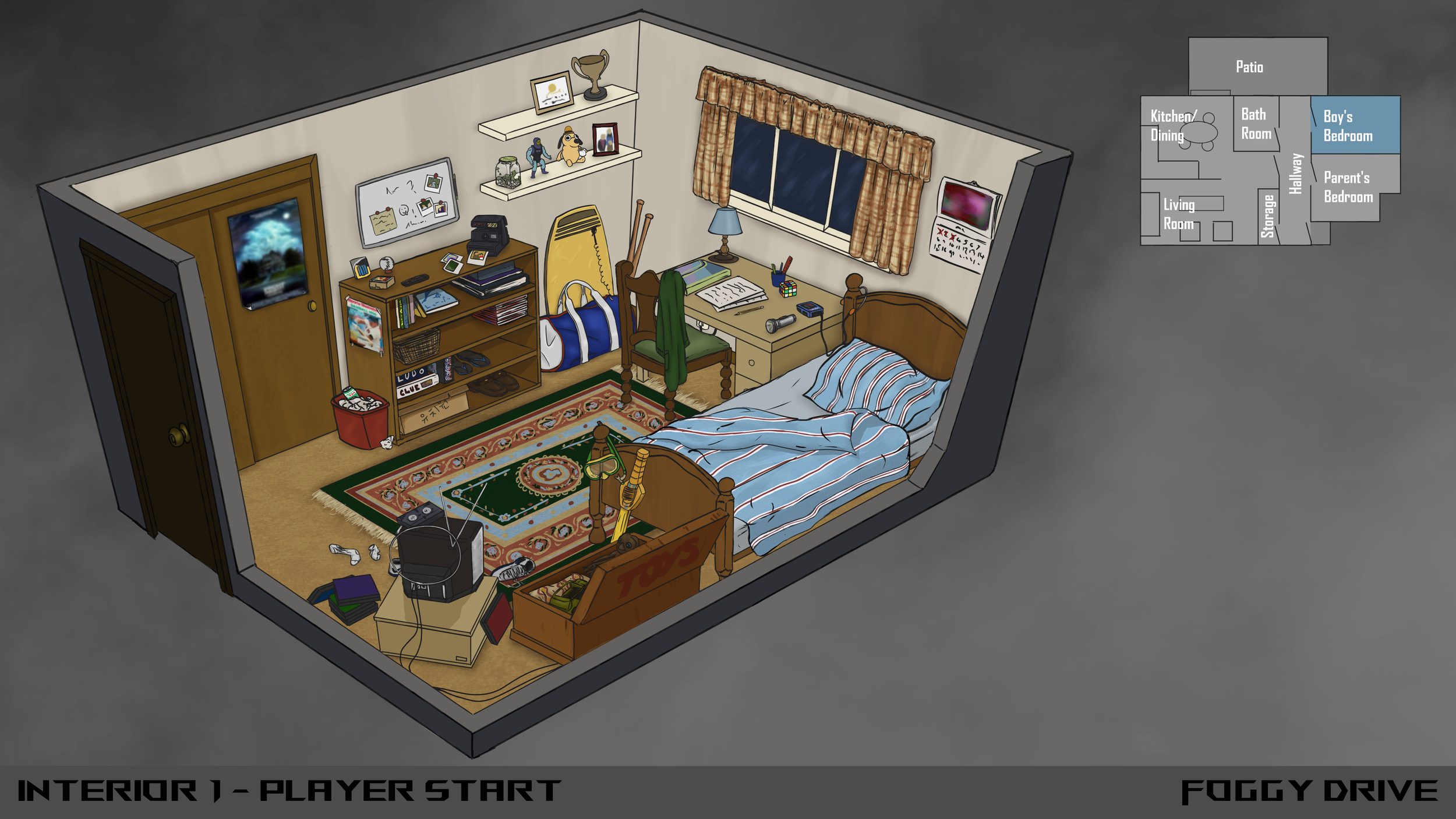
Player starting in the boys room after a bad dream wakes him up. The rug was a main piece, as its based on an Asian vintage design but simplified for a more Western look - it represents the clash of cultures strongly as a potential heritage from the boy's parents.
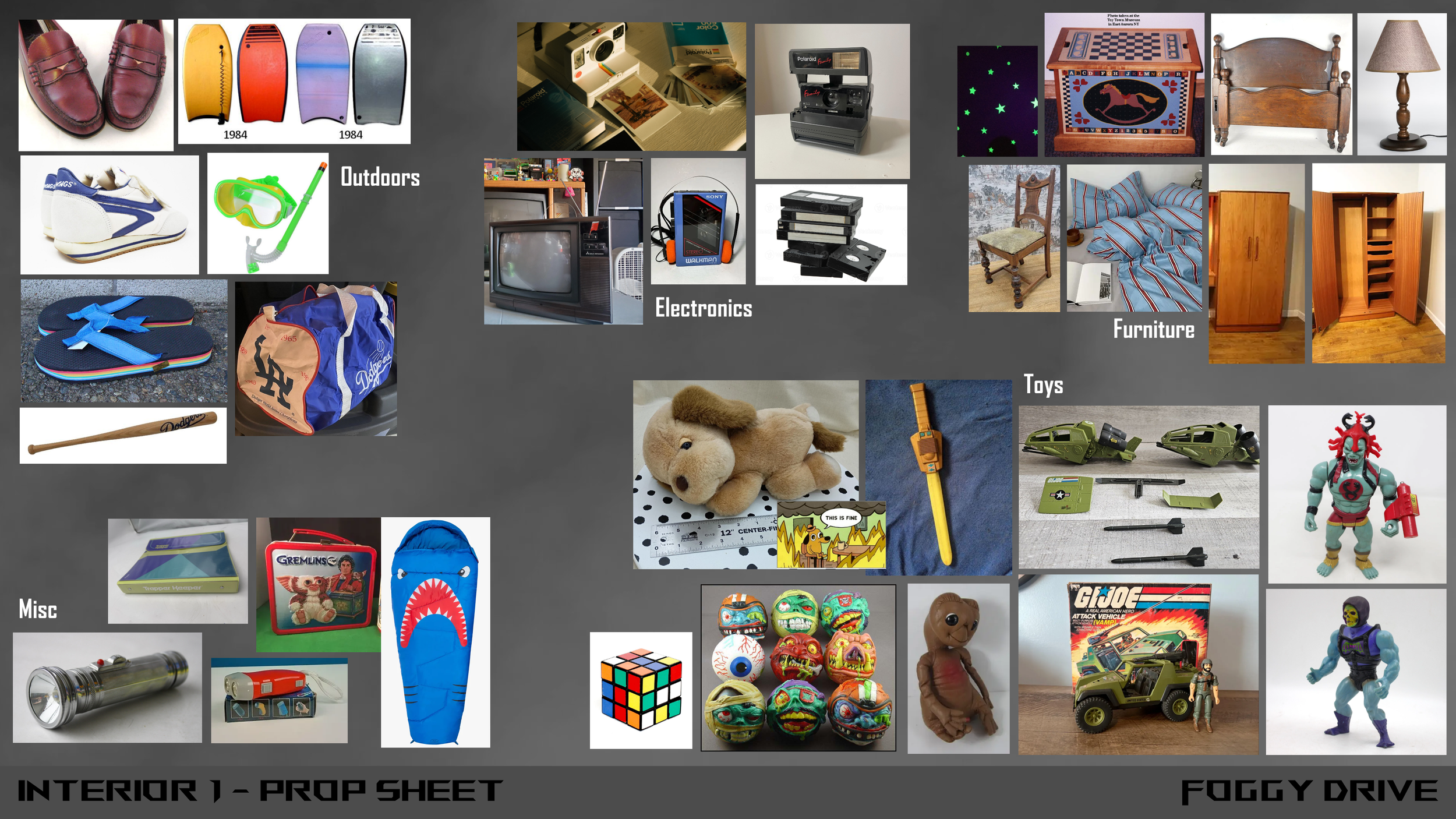
Hunting for reference photos from 1986 was tough, but combining lots of old photographs, with vintage furniture and toys started to bring it to life. Keeping it simple with authentic highlight items was key.
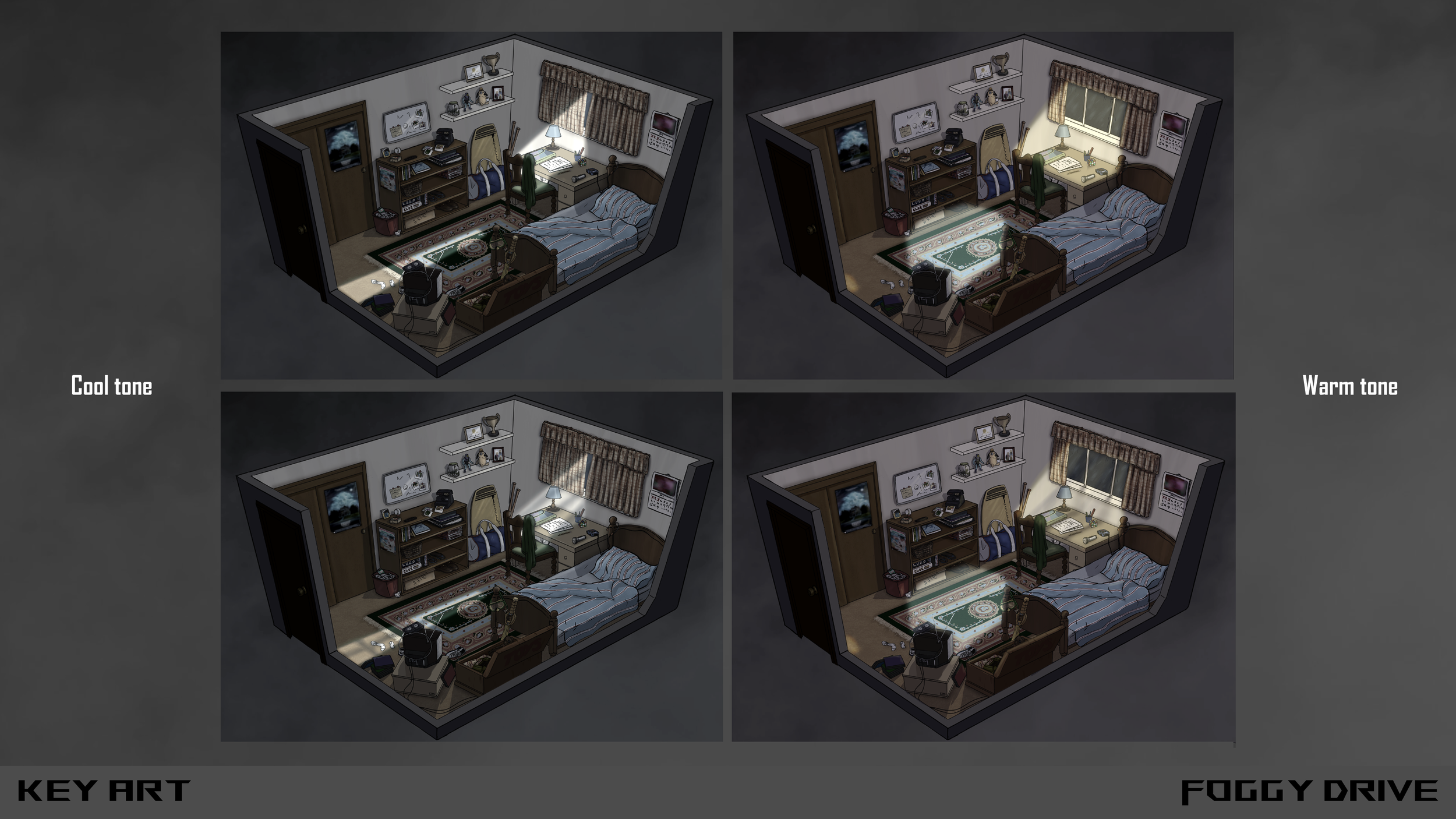
Establishing tone
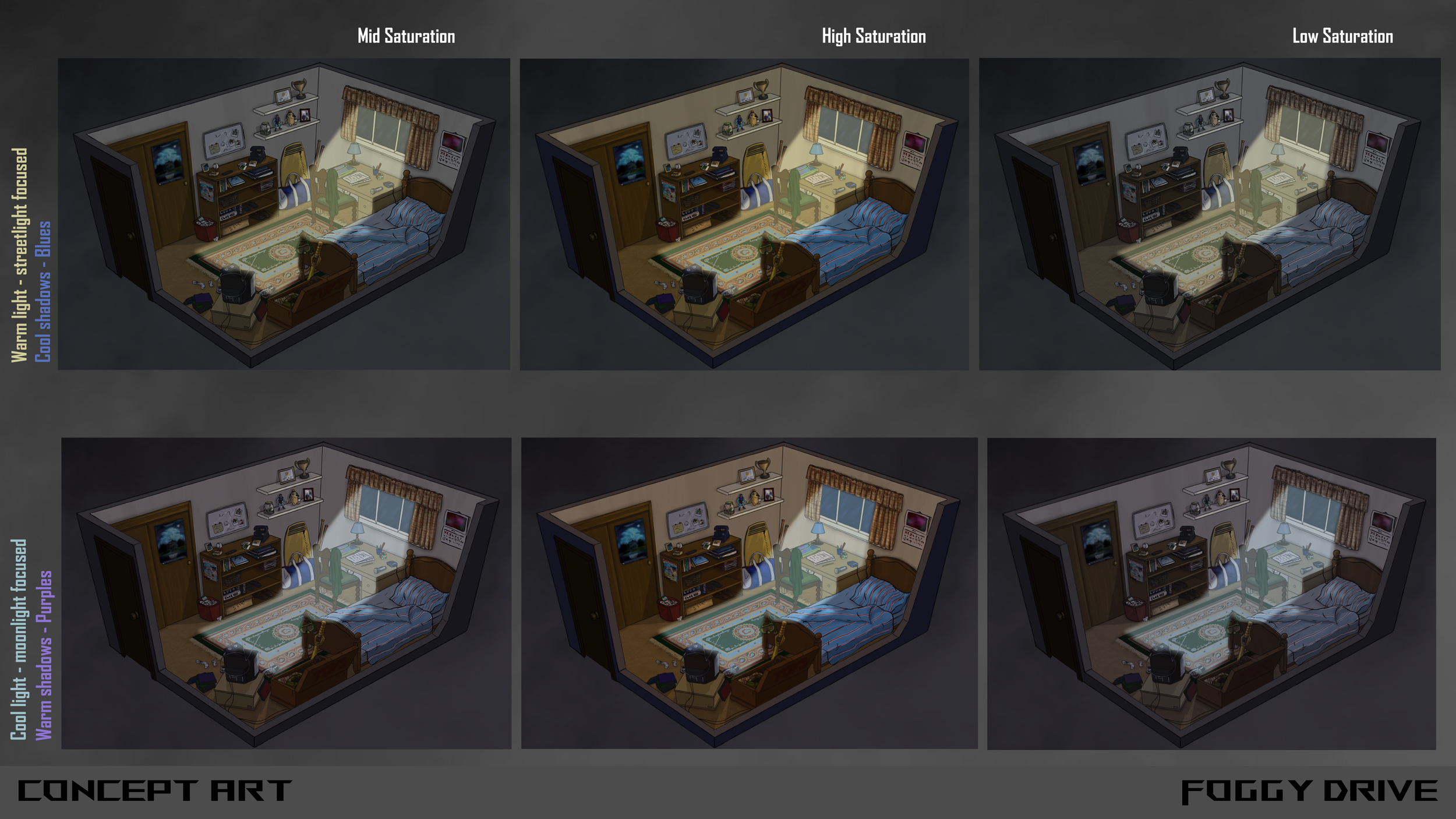
Establishing saturation 'rules'
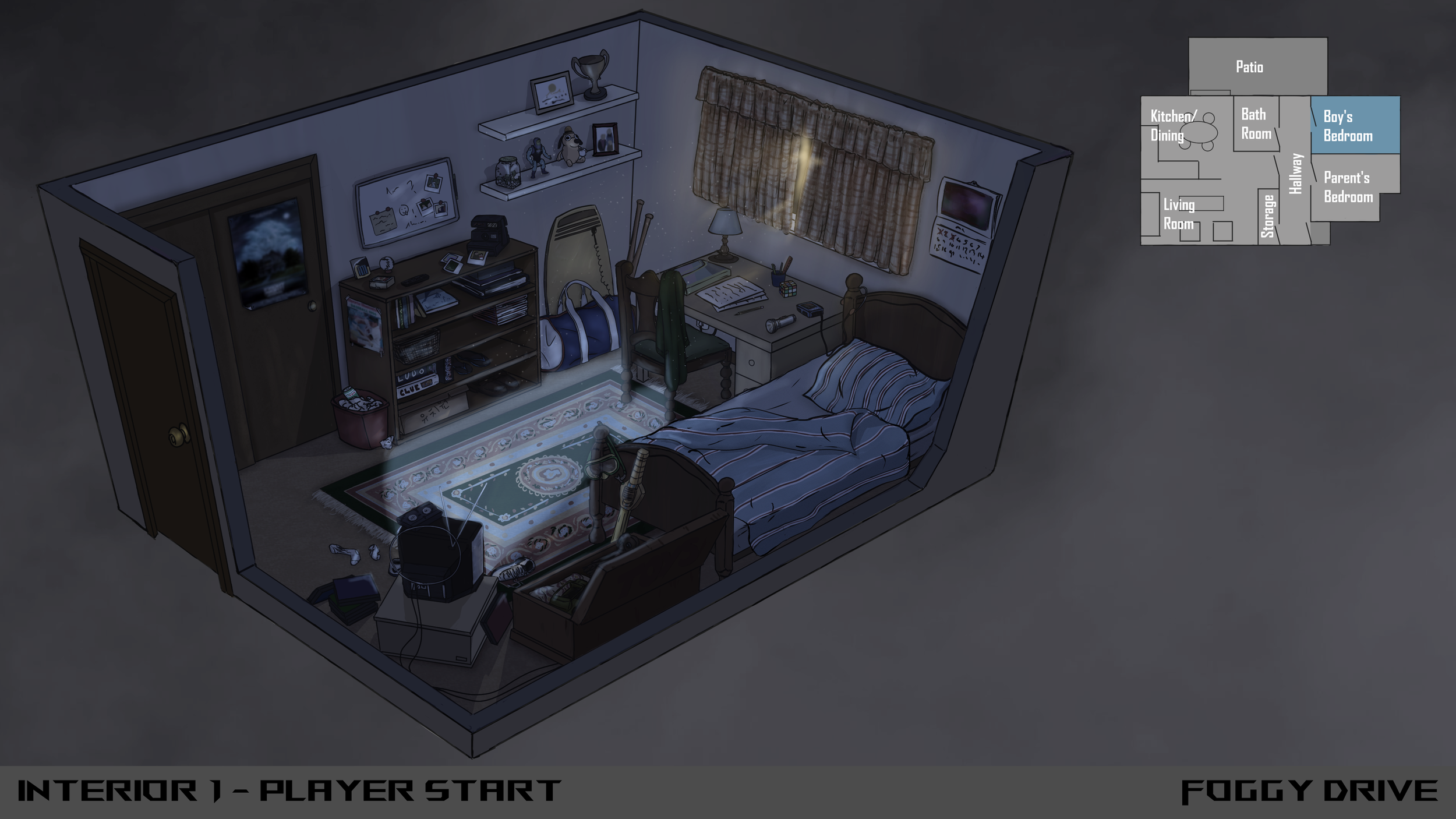
Final game-end lighting.
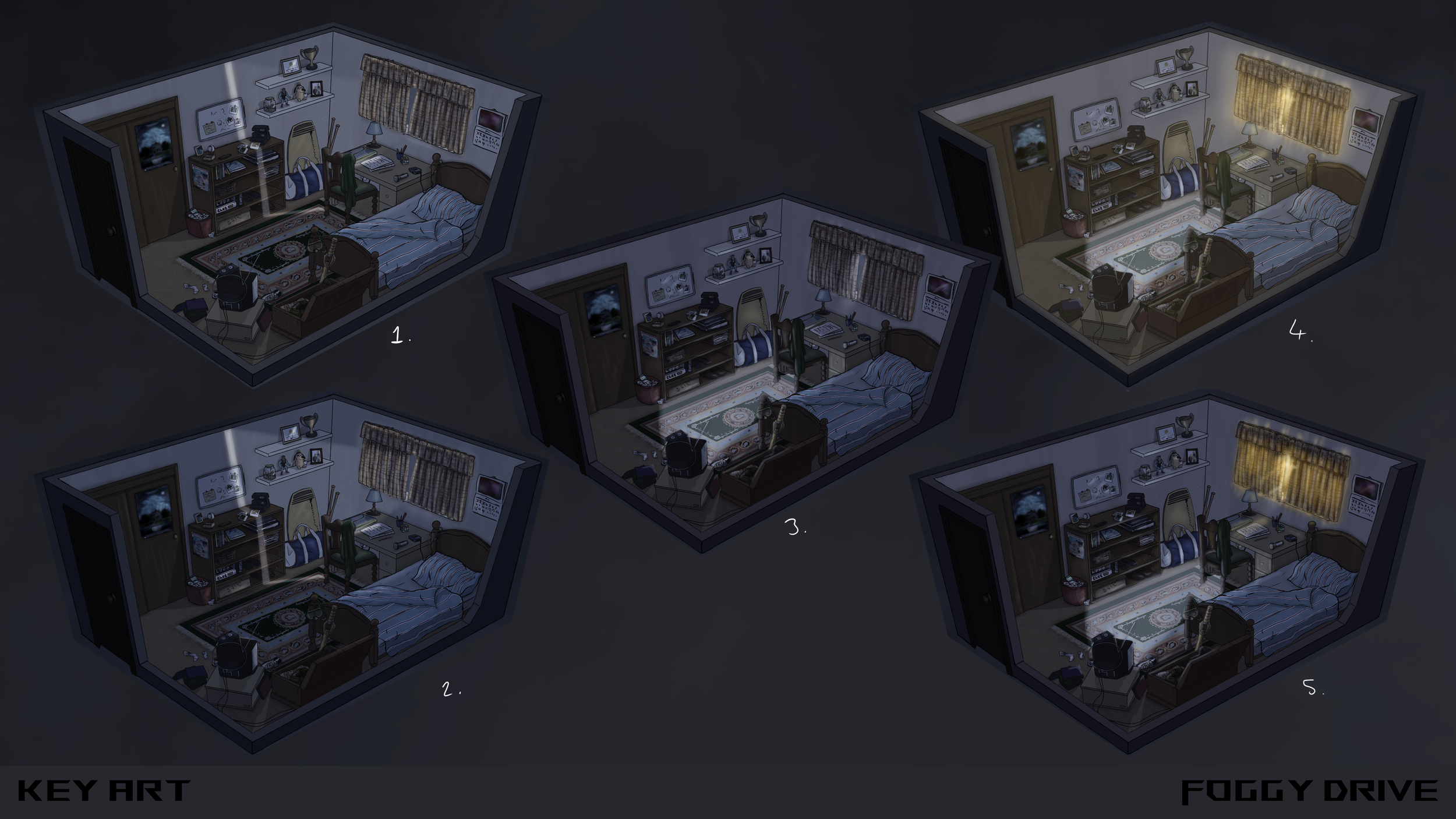
Establishing lighting for the time period of the game - beginning in night and ending in daylight.
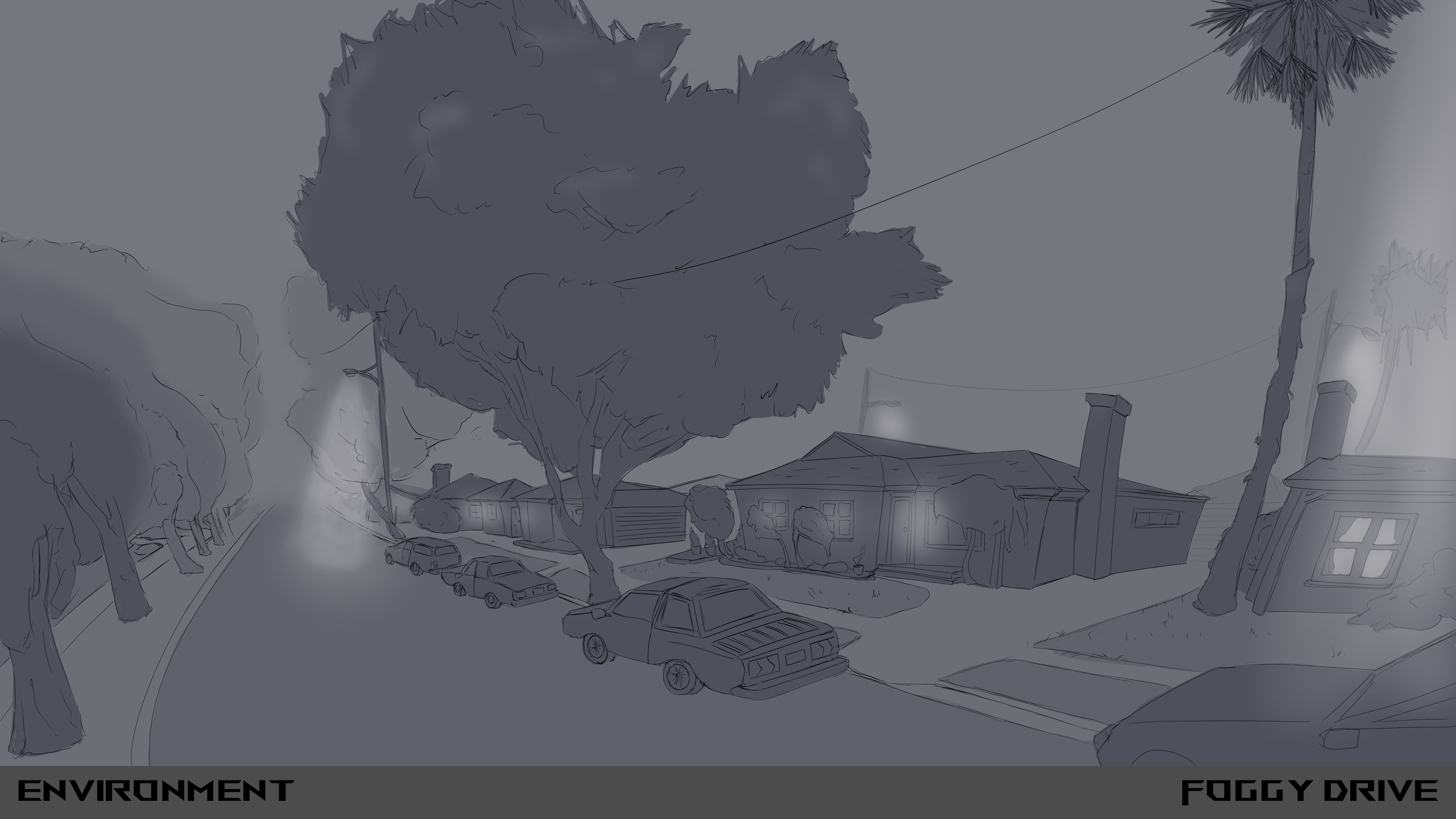
Establishing the mood - the lighting and the level of fish eye, warping and fog.
3D Blocking & Environment Design
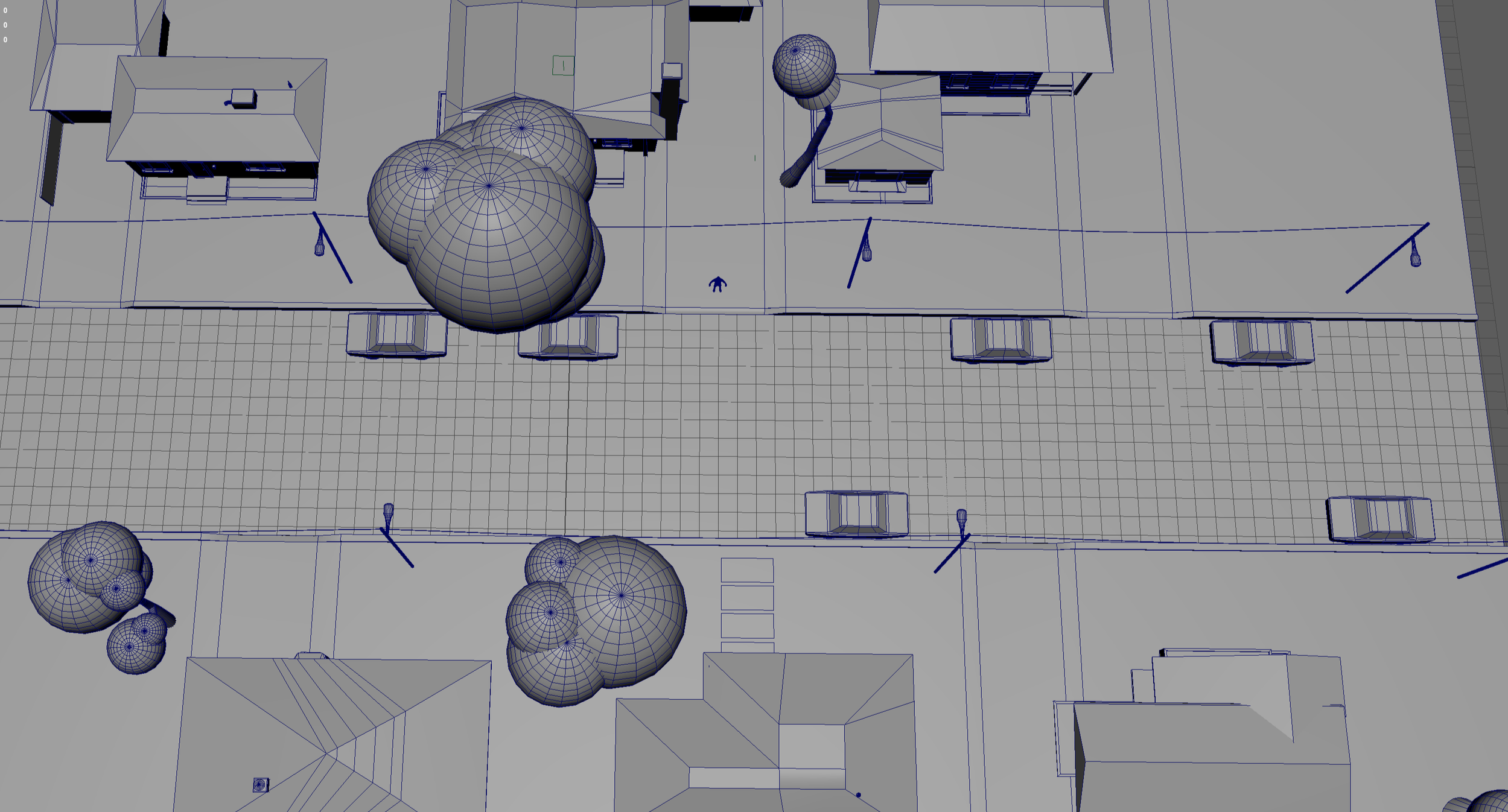
We had to go beyond greyboxing to really feel the environment mood and decide the game programming.
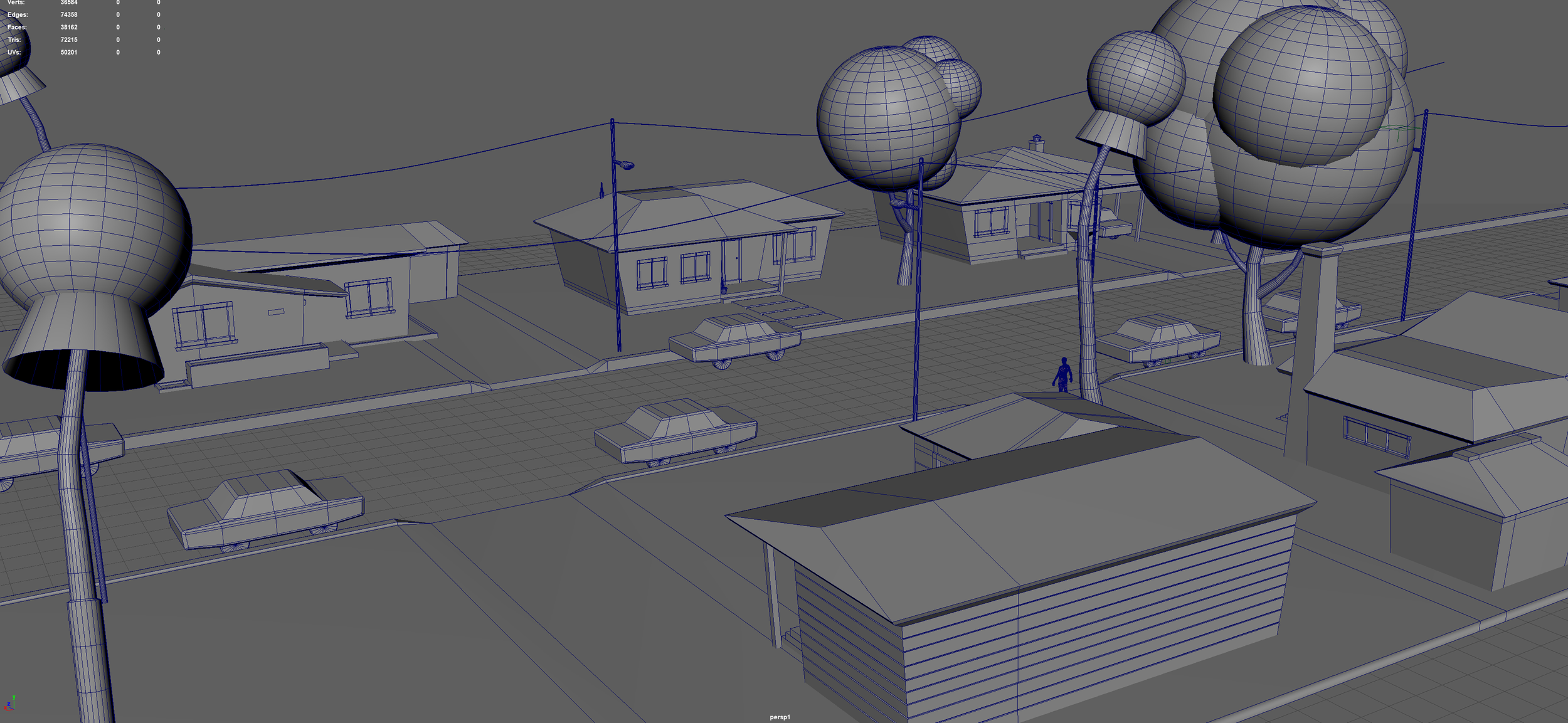
The houses were purposefully individual, but still had similar aspects and reusable modular parts.
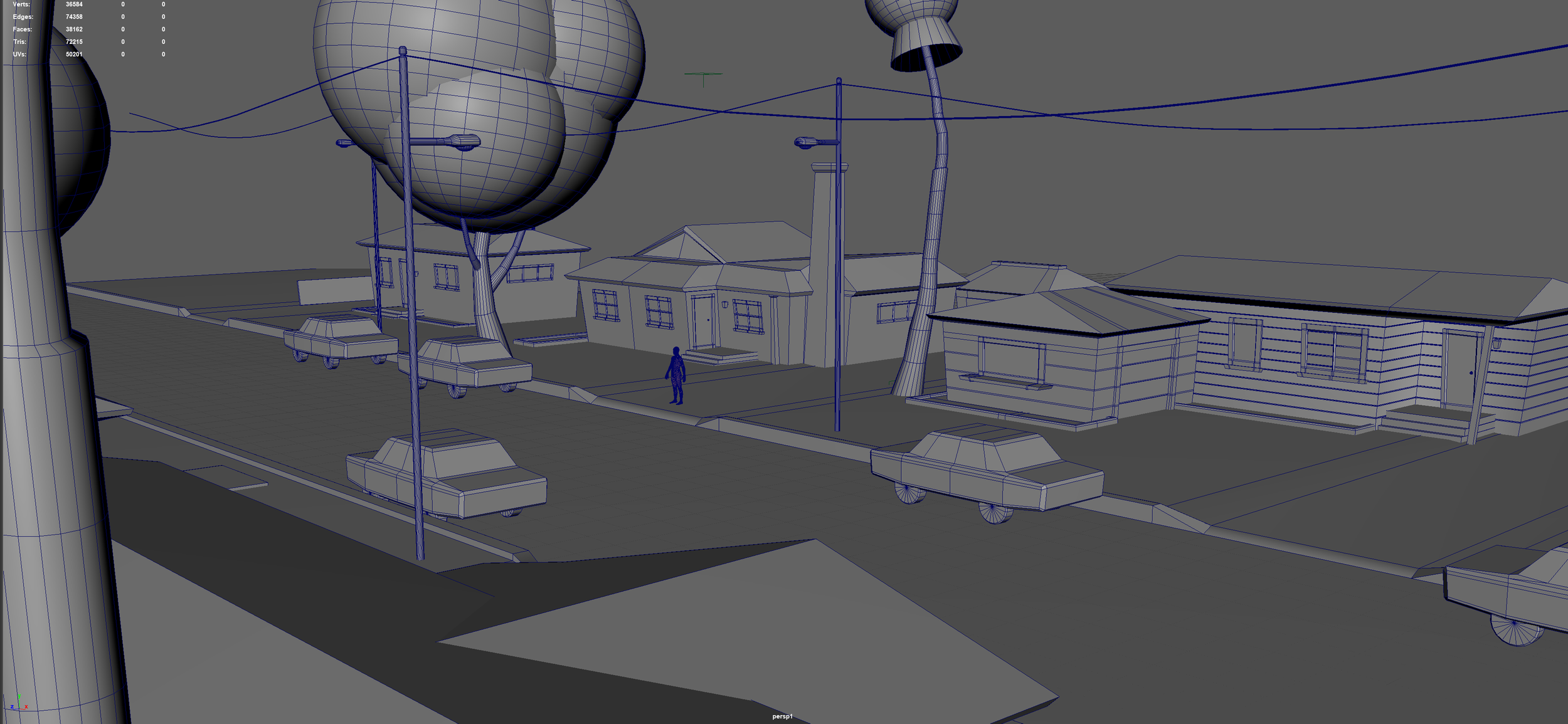
The player's starting home is visually distinct indicated by the complex roof and the tall chimney
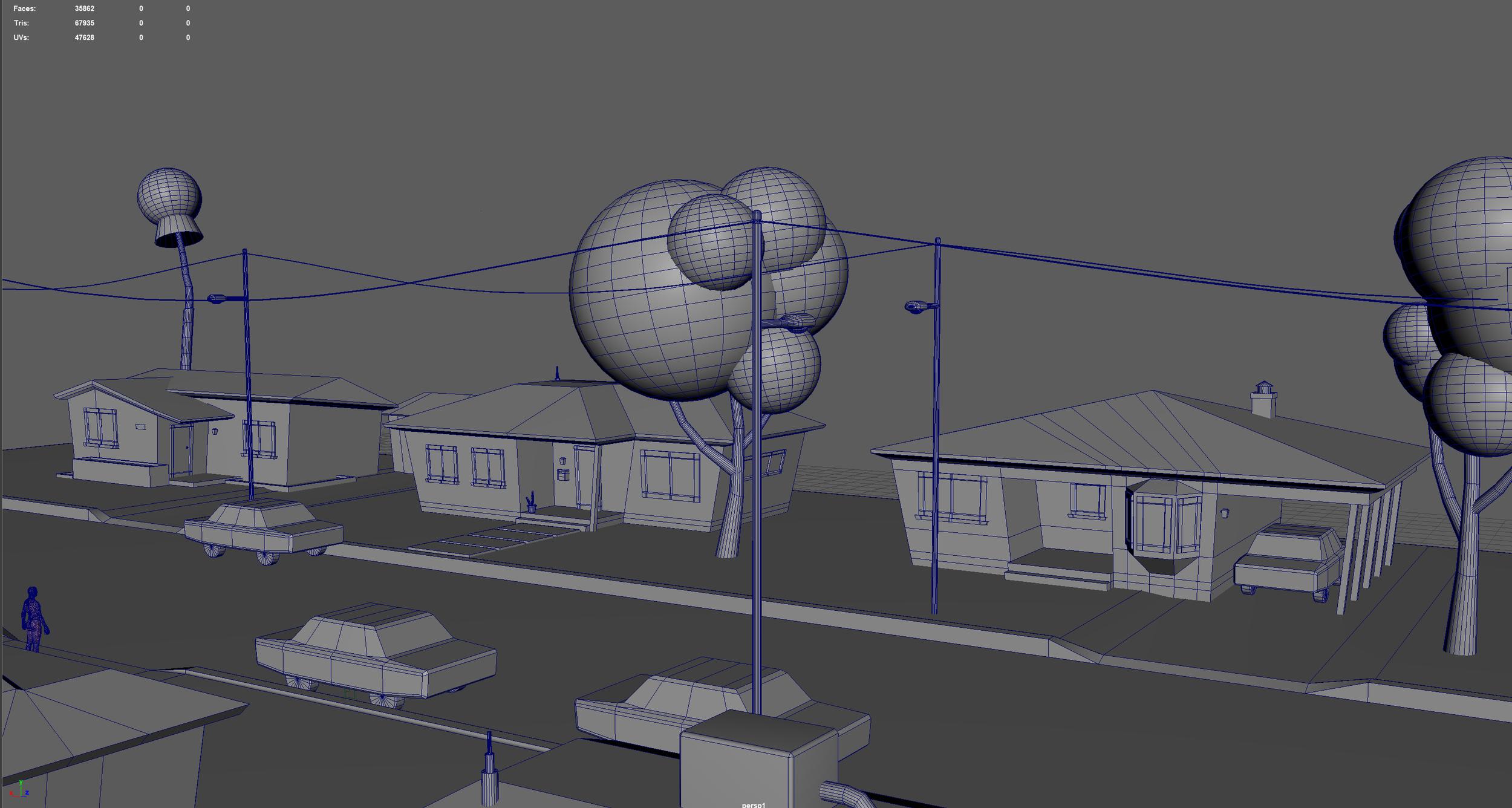
We began with playing with a street view to experiment with the world development and driving movement.